The Third Space: How to Use Your Wardrobe to Separate Ambition from Rest
The “always on” life creates cognitive blur, that hollow exhaustion where work anxiety and rest fatigue dangerously mix, leaving you with fragmented thoughts and a low-grade hum of anxiety. In a culture where late nights and coffee have become a new aesthetic, we are made to think this is the only way to be successful. But this constant state secretly sacrifices the very things that lead to long-term success. The secret to being “fully on” is the wisdom to be “fully off.” And the tool for creating that essential boundary is your wardrobe, establishing what we call the Third Space.
The Wardrobe of Ambition: A Uniform for Outward Energy
When your environment does not signal productivity, your clothes must. Putting on a uniform for focused, outward-facing energy, even when working from home, is a profound act of enclothed cognition. Wearing a sharp blazer or a crisp collared shirt sends a powerful signal to your mind for heightened discipline, alertness, and executive functioning. By repeatedly pairing these garments with productive work periods, your brain develops an associative memory, and the blazer becomes a trigger for a focused mental state. This is enclothed cognition in action.
Embed from Getty ImagesIt is not just the blazer; it is the ritual around it: the structured watch, the sleek boot, the confident click of the heel, the firm leather around the ankle. These subtle, tactile sensations send a cue to your brain: Alertness. Confidence. Action. This repeated pairing makes the garment a personalized cognitive anchor for focus, reducing the internal conflict between wanting to relax and needing to work.
This is fashion as a powerful form of non-verbal communication. Your style sends symbolic cues to both yourself and others. Drawing on sociological theory, wearing certain clothes is a way to manage impressions. A blazer embodies power in many professional settings, but its symbolic weight is learned. For some, it is constraining, while for others, it is liberating.
The Wardrobe of Rest: A Toolkit for Inward Restoration
The moment you take off these “ambition” clothes and put on your soft “rest” clothes, a physical shift occurs. This is your Parasympathetic Nervous System taking over, signaling a move from a high-alert mode to a state of restoration. The immediate sensation is a release of muscular tension, especially around the shoulders, neck, and jaw. Your breathing slows and deepens.

This is more than just comfort; it is a conscious ritual. A Wardrobe of Rest is an intentional sensory toolkit for nurturing and developing a model for self-care. It reinforces a positive mood and gives you permission to slow down. This is distinct from “lazy clothes,” which are often worn out of habit or resignation and can symbolize neglect. The Wardrobe of Rest is a purposeful choice to honor your need for genuine, restorative rest.
The Ritual of Transition: Creating a Third Space
The ritual of changing clothes at the end of the day serves as a deliberate act that separates the world of ambition from the world of rest. This is the creation of a Third Space, a psychological airlock between your two states of being.
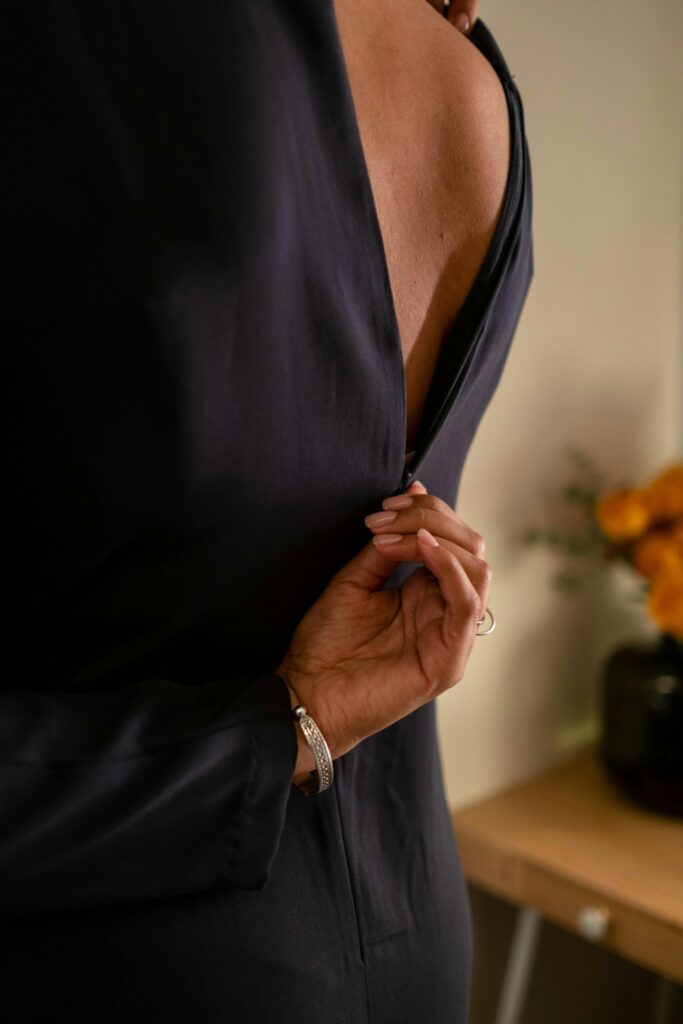
The ritual engages multiple senses: the sound of a zipper, the feeling of a button undone, the scent of the closet. These sensory cues signal to your brain that a mental and emotional shift is occurring. This ritual resets the cognitive palette from the day’s stresses and tells your brain when to shift from high-attention mode to rest mode, reducing the cognitive blur. Repeating this ritual strengthens the neural pathways, making it easier over time to shift your mental context smoothly and reliably.
Conclusion: The Wardrobe as a Stage for the Self
We are not a single identity. With every person, every job, and every phase of our lives, we shift. Clothing is one of the most powerful tools we have to help us distinguish between these different identities. It is as if you have your own alter ego which you are managing through your clothes.
The “Wardrobe of Ambition” and the “Wardrobe of Rest” are not just collections of clothes; they are performative stages where your identity is actively expressed and negotiated. By mindfully choosing your wardrobe, you can control how you feel, how you perform, and how you are perceived.