Outfit Repeating Anxiety: Why Wearing the Same Clothes Feels So Risky
The Outfit That “Can’t Be Seen Twice”
There is a familiar hesitation that happens before posting a photo online. The picture looks good. The outfit works. You like how you look. And yet, you pause. This outfit again? The doubt has nothing to do with the clothes themselves. It is about what repeating them might communicate.
The fear is rarely explicit, but it is precise. Will this make me look like I cannot afford new clothes? Will it look like I am not trying anymore? Will people think I am boring, behind, or no longer evolving? Repeating an outfit begins to feel less like a neutral choice and more like a signal you did not intend to send.
At its core, outfit repeating anxiety is not about being seen. It is about being seen as unchanged.
Why Repeating an Outfit Feels Like a Social Mistake
Social media has quietly created an unspoken rule: visibility must come with novelty. New outfits signal effort. Variety suggests momentum. Fresh looks imply growth. Repetition, on the other hand, is often read as stagnation.
This is why repeating outfits on social media can feel like committing a social mistake. Not because anyone has declared it wrong, but because curated feeds trained us to associate change with progress. When you scroll past influencers posting new outfits daily, wearing the same jeans or dress again can feel like falling behind in fashion’s fast lane.
Even when no one comments on it, the discomfort remains internal. Rewearing starts to feel like admitting defeat in a style economy where abundance and effort are expected to be constantly visible.
How Social Media Turned Clothes Into a Visual Archive
Clothes were once fleeting. You wore them, lived your day, and the moment passed. The meaning stayed with you, not on display.
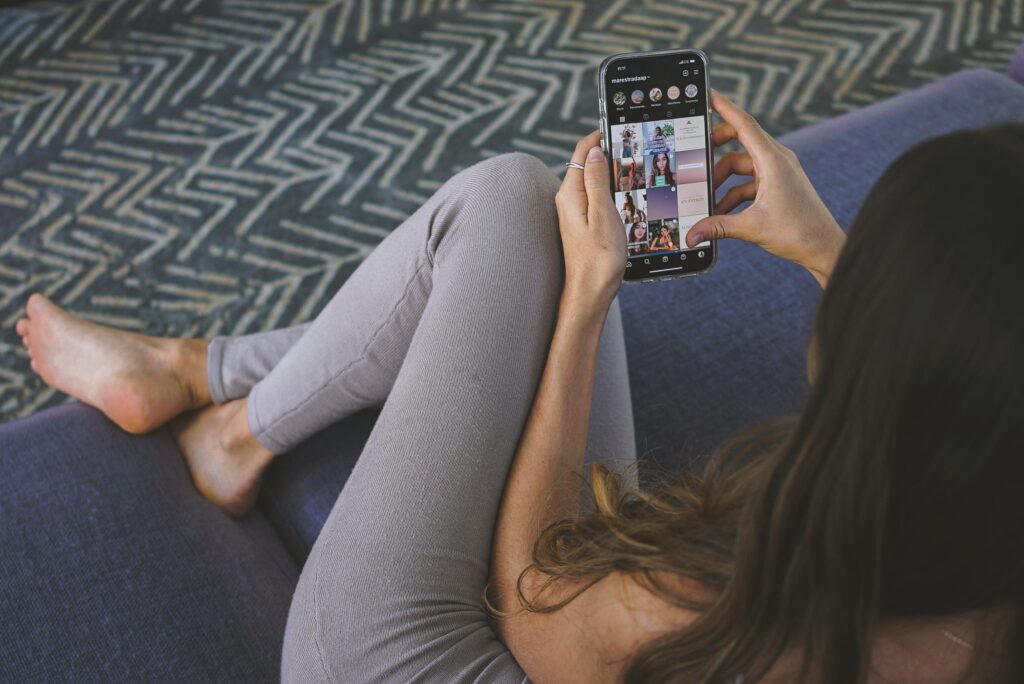
Social media changed that relationship. Platforms like Instagram turned outfits into a visual archive. What you wear now lives on a timeline that can be revisited, compared, and scrolled through months later. The same skirt no longer belongs to one afternoon. It belongs to your public record.
This shift changed our emotional relationship with clothing. Rewearing does not just repeat a garment. It risks exposing sameness across time. In a culture that expects visible evolution, stability can easily be misread as being stuck. That is why outfit repetition feels heavier today than it did before.
The Psychology of Clothing Memory and Emotional Recall
Clothes do not just sit on the body. They store memory.
An outfit worn on a difficult day often triggers a physical response when worn again. A tight chest. A cold drop in the stomach. A sense of pulling back before you can explain why. The fabric itself feels different, not because it changed, but because your body remembers the emotional state you were in the last time you wore it.
This is the psychology of clothing memory at work. Your brain links the garment to the experience. A dress worn during a breakup may still look beautiful months later, yet wearing it brings back the emotional weight of that moment. The memory arrives through the body before it arrives as a thought.
Why Some Clothes Make Us Feel Stronger When We Rewear Them
The opposite experience exists too. Some clothes feel grounding. A shirt worn to a successful interview. A blouse you wore on a day you felt capable and confident. These pieces often become “lucky,” not because they caused success, but because they remind your body of who you were in that moment.
Rewearing these clothes is not about recreating excitement. It is about borrowing strength. The fabric cues posture, confidence, and familiarity. It quietly reminds you that you have handled things before. That sense of steadiness becomes stored in the garment itself.
Dressing for an Imagined Audience on Social Media
On social media, most people are not dressing for real individuals. They are dressing for an imagined audience. A composite figure made up of friends, strangers, silent followers, and hypothetical critics.
This imagined audience feels watchful even when it is not. It sets invisible rules about what looks relevant, aspirational, or impressive. Fresh outfits read as progress. Repeats risk being read as laziness, decline, or lack of effort.
Friends might not care. In reality, most people are too focused on themselves to notice. But the imagined judge persists, encouraging more curation, more novelty, and more distance from how people actually live.
Why Fashion Culture Rewards Newness Over Repetition
Outfit repeating anxiety is not just personal. It is cultural. Fast fashion and rapid trend cycles shortened the emotional lifespan of clothes. Repeating no longer feels lived-in. It feels late.
In digital fashion culture, newness is rewarded with visibility. When public figures like Kate Middleton repeat outfits, it is praised as relatable. When influencers do the same, it is often interpreted as a lack of effort or resources. The difference lies in expectation. Celebrities are allowed to exist. Influencers are expected to perform aspiration.
Over time, this trains audiences and creators alike to equate fashion relevance with constant visual novelty, even when that expectation is unrealistic.
Outfit Repeating Anxiety and the Need for Newness
Buying or wearing something new creates a rush. Colours feel sharper. Fabric smells new. Mood lifts. There is a sense of reset, as if something in life has moved forward.
Then the feeling fades. The outfit becomes ordinary. The excitement flattens. And the search for the next new thing begins. This is not vanity. It is emotional regulation.
People chase new clothes to escape boredom, insecurity, and the fear of being stuck. Newness offers visible proof of change when internal growth feels slow. Wanting that relief does not make someone shallow. It makes them human.
Rewearing Clothes as Self-Expression, Not Failure
Rewearing becomes powerful when it is intentional. Self-congruence is the alignment between who you are and how you present yourself. When your wardrobe reflects your inner reality rather than an external standard, repetition stops feeling threatening.
A self-congruent woman rewears her favourite pieces without anxiety because they feel like her. The same garment worn across seasons, moods, or contexts becomes part of her identity rather than evidence against it. Styling evolves. Meaning deepens. The outfit grows with her instead of being replaced.
This is not about rejecting new clothes. It is about choosing them with alignment rather than urgency.
What Rewearing Clothes Really Says About Identity
A well-loved outfit becomes a quiet thread through time. It carries who you were, who you are, and who you are becoming. Each rewear adds meaning instead of erasing the past.
In a culture obsessed with constant reinvention, rewearing can be a grounded choice. It says growth does not always need to look new. Sometimes, it simply needs to feel true.