The Sovereign Palette: A Deep Dive into Your Emotional Signature Colour
Beyond the Palette: Mastering Your Emotional Signature Colour
In the first part of this series, we laid the foundation for your Sovereign Palette: a collection of hues chosen not by seasonal rules, but by emotional and aesthetic truth. Now, we move beyond choice to fluency. This is about learning to speak colour.
This goes beyond what you wear. It extends to what you choose, and the worlds you create around you. When you find the colours you truly identify with, surrounding yourself with them brings calm, focus, or quiet joy. This is how you begin regulating emotion through colour. It’s the moment you shift from having a style to wielding one.
The Psychology of Colour: Deconstructing Meaning
Every colour speaks. Some energize, some soothe. Each carries intent. Its message is a complex fusion of biology, culture, and your own personal history. To master your palette, you must understand these three layers.
The Universal Language:
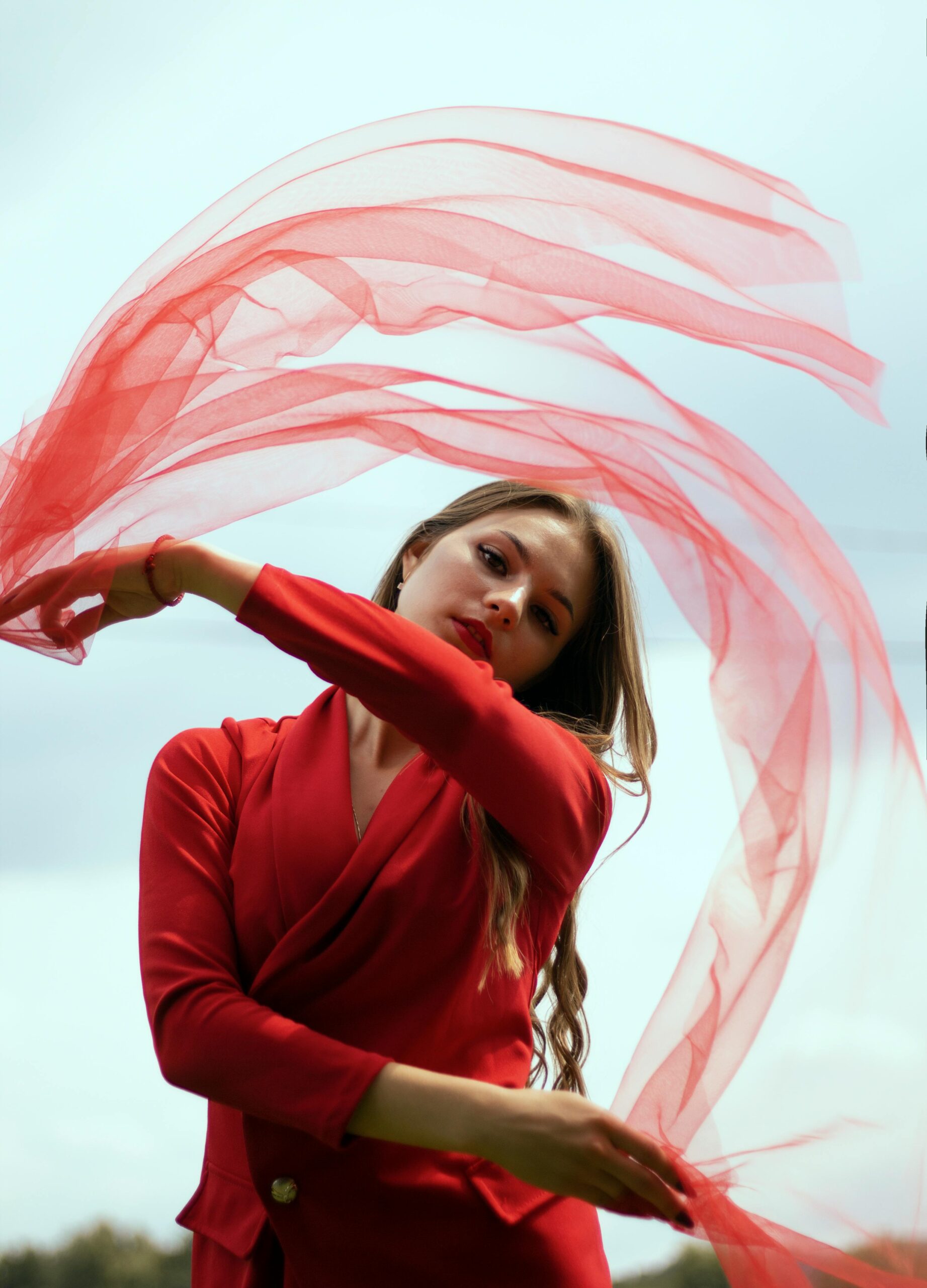
At a primal level, colour perception begins with science. The wavelength of a colour’s light affects how our brain processes it. Red, with its long wavelength, is stimulating, triggering evolutionary associations with blood and danger, which can increase heart rate. Blue, the colour of sky and water, has a shorter wavelength, requires less neural processing, and is linked to feelings of stability, safety, and calm. This is the biological foundation of colour’s power.
The Cultural Dialect:
The environment we grow up in adds a unique and powerful layer of meaning. In many Western cultures, brides wear white to symbolise purity. In Hinduism, however, white is traditionally the colour of mourning, worn by widows. Culture and society shape our interpretations, influencing everything from marketing to the paint on our houses. Understanding this dialect is essential to true colour sovereignty.
The Personal Signature Colour:
The final, and most important, layer is your own. A woman may know that yellow is universally cheerful, but if she has a significant negative memory associated with that colour, her personal experience will always be more powerful. Your feelings are the final authority. To decode your personal signature, you must look for the data in your own life. Remember, this signature isn’t only about clothing. A lot of people don’t consciously have a signature colour for fashion, but they often have one for their interior decor or the items they love. Notice the hues that return to you: in clothes, in rooms, in keepsakes. They’re not a coincidence; they’re a signature.
Advanced Application: The Nuance of Combination
Once you know your individual colours, the next level is fluency: how they converse.
Analogous Pairings:
These are colours that sit next to each other on the colour wheel, like blue and green. Their shared undertones create instant harmony. Blue and green evoke landscapes: forests, seas, serenity. It is a combination that feels peaceful, soothing, and deeply in tune with the natural world. It signals a quiet, thoughtful intention.
Monochromatic Layering:
Dressing in tonal layers of one colour, such as charcoal, dove grey, and silver, signals quiet mastery. It sends a powerful psychological message of control and “quiet luxury.” Because it reduces the cognitive load on the viewer’s brain, it is immediately perceived as highly sophisticated and well-controlled. This visual consistency signals discipline and projects quiet authority.
Case Studies in Colour: From Theory to Practice
The Power of a “Non-Traditional Neutral”: Deep Olive Green
A neutral is any colour that can serve as a quiet background for brighter accents. Beyond black, white, or beige, deep olive green offers a sophisticated alternative. Its muted, earthy nature feels grounded and doesn’t demand attention. It feels grounded, modern, faintly mysterious. It adds quiet depth to your foundation wardrobe.
The Strategic Use of an “Off-Colour”: Saffron or Marigold
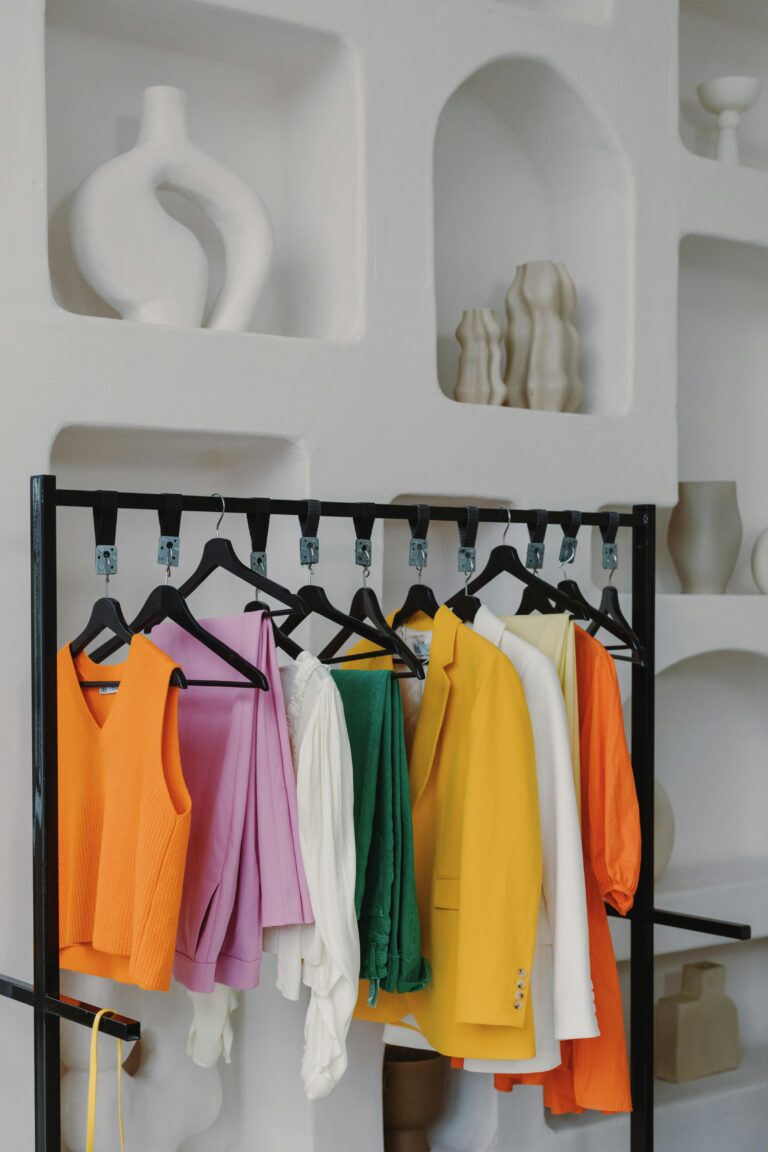
Imagine a calm, composed palette of blues and greys. Now, introduce a single, unexpected accent of saffron or marigold. This off-color prevents the palette from going static. It reveals another dimension: a pulse of warmth beneath composure. It makes your personal style feel more layered and complex.
Conclusion: Your Palette as a Living Language
Your Sovereign Palette isn’t fixed. It’s a living language that grows as you do. The internal signal for this evolution is simple: when the colours around you no longer evoke the desired feeling, or when you feel a deep, magnetic pull toward a new hue, it is time to experiment.
Mastering your color signature is an act of self-knowledge: a quiet return to yourself. And on a practical level, it makes your choices significantly easier. By knowing what you seek, you cut through noise and narrow infinite choices into something unmistakably yours.